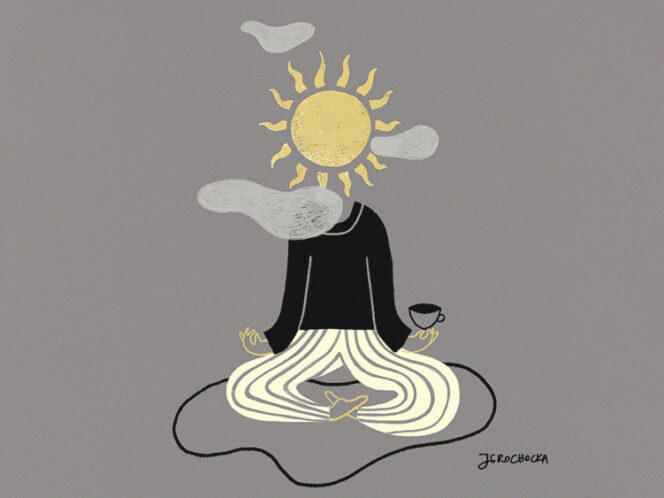




In Indian tradition, energy is considered a universal life force, karma is the law of moral cause and effect, and reincarnation is the cycle of repeated births of the soul until spiritual liberation is attained.
In Indian spiritual traditions such as yoga, Ayurveda, or spiritual sciences like Jyotisha, energy is seen as the fundamental force of life that permeates the entire universe and everything in existence. This energy is often referred to as prana, the universal life force or vitality that flows through the body, mind, and environment. Energy within the body is perceived as a network of channels (nadi) through which prana flows. It can be subtle (spiritual) or more physical, but it is definitely dynamic—constantly changing and transforming, and affecting our health, emotions, and consciousness.
Karma literally means “action” or “deed.” Every action—thought, word, or behavior—produces consequences that return to us in the future. These can be good (positive outcomes from good deeds) or bad (negative consequences of harmful actions). Karma is not punishment, but rather a natural law of moral order. According to this law, our actions shape our future in both this life and in future incarnations.
Reincarnation (Sanskar or Punarmrityu) is the belief in the soul’s repeated births in different bodies and forms of life until it reaches full liberation (moksha). The soul (atman), as understood in this philosophy, is eternal and immortal. It transitions from one body to another, and the cycle of birth, death, and rebirth is called samsara. The spiritual goal is to break this cycle through spiritual development and enlightenment. Reincarnation is closely linked to karma; the consequences of past lives shape the conditions of future incarnations.

Iza Klementowska: For people in the West, speaking about the soul or energy is often uncomfortable. It’s as if we’re ashamed of its existence or prefer to ignore it. We’re more comfortable with scientific knowledge that can be verified, rather than discussing something we may believe in but, for some reason, are embarrassed to admit that we do. It was a bit easier for you, growing up in a family immersed in spirituality. But was there anything in particular that truly drew you in this direction?
Ashuntossh Chaawlla: If you’re asking about some sort of spectacular “awakening,” then no, not really. For me, everything came quite naturally. I believe it’s the result of sanskaras—impressions and memories from past lives. From an early age, I felt a deep attraction to spirituality and sacred texts. My father practiced Jyotisha, not professionally, but with great passion. As a child, even before I could write well, I would sit next to him, watch him draw charts, and listen as he explained the positions of the planets and how time influences human life. It was like a second language for me. It might sound a little boastful, but at age three, I won a storytelling competition in preschool. I recited the Ramayana, the ancient Indian epic—at age three! I remember it like it was yesterday—standing in front of the class, telling stories of Sri Rama. How did I know it? I believe the soul remembers. Perhaps they were echoes from past incarnations. But what I do know is that spirituality came as naturally to me as breathing.
You mentioned Jyotisha. What’s the difference between regular astrology and Vedic astrology?
In today’s world, which is full of anxiety, information chaos, and what I call “pseudo-rationalism,” Jyotisha is often mistakenly equated with astrology. That’s a big simplification. For me, it’s both: a science and a path to self-knowledge as well as a path to spiritual freedom and service to others. It’s a light that illuminates the calling of your soul, or mine.
Jyotisha is a Sanskrit word that literally means “the science of light,” a whole system of knowledge that studies the influence of cosmic energies (planets, stars, but also people, places, and events) on our inner world, our psyche, our lives, and our decisions. In Sanskrit, jyoti means “light,” and sha means “that which gives or leads,” so it literally means “the light of consciousness.”
Unlike Western astrology, which often has a fatalistic and deterministic flavor, Jyotisha is a science of self-realization and spiritual evolution. It’s a tool meant to liberate you, not to limit you. It’s not about predicting the future, but understanding your inner nature and working with energy, both internal and external. It’s certainly not fortune-telling. It’s a real, spiritual map that helps you understand who you are, where you are in life, which energies support you, and which might create conflict.
What are these spiritual maps?
What we call a horoscope is, in essence, an energy map. It reflects the positions of the planets at the moment of birth. The configuration of the sky at the time of birth shows the kind of energy we are born with and how it will evolve throughout our life on Earth. It’s like a photograph of the sky taken at the moment of your birth—that snapshot becomes your horoscope. Planets, of course, are not static. The horoscope primarily defines our genetic structure; you could say it reflects our energetic DNA. But the planets keep moving across the sky, through different rashi (zodiac signs), and returning cyclically. This motion creates life situations and changes in the environment—energy shifts we feel around us.
That’s also something the Vedas, the oldest spiritual texts of India, talk about.
Yes, the Vedas always said that Jyotisha should lead a person to moksha, which means “liberation.” Not to instill fear about the future, but to help us know ourselves better. Prediction is just a side effect. The real purpose of Jyotisha has always been to guide a person toward spiritual liberation and divine connection. It’s not a forecasting system, it’s a tool of self-awareness. Over time, people focused on the predictive aspect of Jyotisha because it’s more flashy, easier to understand, and media-friendly. But Jyotisha’s real power lies in its ability to help you understand and connect with the nature of your energies and those around you, whether in the form of people, objects, or even events. It’s about how all these elements influence us and what we can do to strengthen our potential, seize opportunities, overcome weaknesses, and be prepared for challenges.
Can you say more about energy’s influence on us?
In Jyotisha, it’s assumed that all energy influences other energy. We are made of energy and surrounded by energy. Everything we do, even blinking, nodding, moving, sleeping, eating, constantly transforms our internal energy. It’s obvious: when you’re tired, you sleep and wake up refreshed, that’s energy transformation. When you’re hungry and irritated, and then eat something nourishing, you feel better. That’s energy change. Listening to mantras, meditating, exercising, breathing (pranayama), even watching TV or scrolling through Instagram—it all changes your inner energy. And vice versa: everything inside you affects the energy around you. Transformation is constant. Evolution is ongoing, it never stops. Jyotisha texts say all these energies are manifestations of Lord Vishnu. But what does “Vishnu” mean? The word Vishnu refers to the subtle, omnipresent energy that permeates every atom of the universe. This most delicate form of energy sustains the whole world.
This universal energy has been categorized into nine main forms called grahas. I wouldn’t say they’re just “planets” because the planets are only part of these nine energies. These are nine grahas, nine qualities of energy. When you study Jyotisha, you learn to recognize the properties of each energy, its movement, changes, and interactions. That’s the essence of Jyotisha.
So, we are not separate beings?
As stated in the Upanishads: “Yatha pinde tatha brahmande,” which means “As is the microcosm, so is the macrocosm.” Everything is connected. Just as our inner energy affects the environment, so too does the environment affect us. We are all interconnected. Chaos theory explains it similarly: the flap of a butterfly’s wings in one part of the world can cause a tsunami in another. All of creation is chaotically interconnected; it’s one organism. We are not separate units, we are part of one consciousness. Everything influences everything else, and we can never fully predict how a small change will lead to something big or vice versa.
And astrology?
Astrology is primarily based on the precise calculation of planetary movements. Sometimes I feel that this mathematical aspect is overlooked by many people. The role of nakshatras—the lunar constellations—is often ignored because most focus on zodiac signs. But according to ancient texts, calculations should be based on these nakshatras. As I often say in interviews, planets do not determine your fate, they simply show clearly where you are in life at any given moment.
In your answers, you often refer to the Vedas and Puranas. Why are they so important to you?
Because they’re our roots. The Puranas say that the Vedas were misunderstood by many people from the very beginning. That’s why Lord Shiva came to Earth as a teacher—Dakshinamurthy—to convey that knowledge in the form of the Upanishads, in a way accessible to beings living on Bhuloka, Earth. That isn’t just a legend, it’s a deep metaphor. Divinity descends into the human world to bring light, understanding, and context. The same happened with Krishna. He came during a time of immense spiritual confusion, when knowledge was being abused and distorted. The Bhagavad Gita, which he gave us, is the distilled essence of the entire Vedas. In our time, Gurudev—Sri Sri Ravi Shankar—has simplified this knowledge, made it practical and alive. He created the Art of Living organization—it’s not just a program, it’s a lifestyle based on wisdom, breath, and mindfulness.
As far as I know, your family strongly supported your spiritual path?
Especially my grandparents, who were my first spiritual teachers. I mainly grew up with them because my father worked in government administration and was frequently transferred. For a stable childhood, I stayed with my grandparents. At their home, it was normal to tell stories from the Puranas, the Ramayana, the Mahabharata. This was our daily life. In the evenings, we prayed together, visited many temples, and attended satsangs—spiritual gatherings with music and chanting. This wasn’t just knowledge I was drawn to; it was my life. My family home was modest, but full of respect for tradition and knowledge. Later, when I went to high school and university, other ambitions emerged. But the spiritual seed had already been planted. I wanted to move into an ashram, but my family told me I’d always have time for that and encouraged me to pursue something professional first. So I did an MBA. At my university, I met a professor who was very spiritual but also wealthy and influential. Spirituality, wealth, and power coexisted effortlessly in him. I admired that. He told me, “Achieve financial freedom, and then serve spirituality.” That inspired me.
You mentioned satsangs and sacred texts. How important did they become later?
Immensely. In my teenage years, I started visiting a friend’s neighbor who turned out to be a local sage. I still remember the scent of homa—ritual fire—in his home. I was fascinated. I would go there almost daily. We talked about the Vedas and the Upanishads, and I reflected on questions about karma, time, and the soul. He was my first spiritual mentor.
You were introduced to Krishna by your grandparents too? You often say your heart turned to him early on.
Yes, at first it was Sri Rama. But in my teenage years, I gave my heart completely to Krishna and Radha. It was that kind of crystalline certainty, without hesitation, that they were always with me like true friends. Honestly, I treat them as my closest friends, because I know they’re always there. Praying to them has given me inner strength. Whether it was minor disappointments, major failures, failed exams, or heartbreaks, there was always a sign—a picture, a scent of incense, a song—that instantly let me know I wasn’t alone. It was through Krishna that I discovered the satsangs of the Art of Living foundation. First came the music, then the practices, and finally the decision. I took the course—Sudarshan Kriya—a breathing technique that literally changed my energy. I started volunteering (seva) and felt, simply, that this was my place in the world. I felt that this was my path.
But still, at first, you tried to walk the “worldly” path, right?
Yes. After my MBA, I planned to achieve financial freedom by age thirty and then devote myself entirely to spirituality. Everything was going to plan until the 2008 global financial crisis. I lost all my savings, investments, and financial stability. I literally felt the ground slipping from under my feet. Today, I know it was a gift. I immediately understood that I couldn’t wait any longer. If I was going to follow the path of the soul, I had to do it now. I was thirty when I shut down my business and moved into an ashram.
That’s when you met Gurudev?
Exactly. I met him for the first time in person in Delhi, fifteen years ago. It was a long conversation. But it only took that one meeting for me to feel an inner certainty and clarity. It wasn’t an emotional eureka, it was silence and complete inner agreement with what was to come. I knew I had to go home, close my business, and settle permanently in the ashram. I’ve never been so sure of anything in my life. That’s how a new chapter of my life began.
What exactly is Art of Living for you?
The Art of Living foundation is a global organization founded by Sri Sri Ravi Shankar, a spiritual teacher whom we call Param Pujya Gurudev (meaning “Most Revered Master”). It was established in the 1980s as a response to the growing stress and disintegration of the modern world, to the complete emotional and spiritual turmoil of contemporary humans who have started to forget who they are and why they are here. Above all, they’ve started to lose themselves—their nature, individuality, uniqueness, and authenticity. The goal of Art of Living is to promote peace, joy, and spiritual practice through breath, meditation, Vedic wisdom, and social service. It is not a religious sect, although some think so. It is a universal movement that teaches spirituality as the ability to live in harmony with oneself, with others, with nature. The very term, the very name—Art of Living—says it all. Life is an art that no one teaches us, and our primary lessons should be how to be happy, how to transform difficulties into strength, and how to create harmony within ourselves and—as a result—all around us. For me, Art of Living is not just an organization. It is simply—and profoundly—a way of life.
How does your work with Jyotisha look today?
I help people understand their inner energetic map. When you know where your weak points are, where your talents hide—or don’t—and which planetary cycles support you, then you make better decisions. Jyotisha is not fortune-telling; it’s a GPS for your own consciousness. I work with people who face all kinds of life, work, emotional, and spiritual conflicts and I show them: “This is not your fate, this is energy that you can transform.” In my practice, Jyotisha is a tool to empower the person. I study how internal energy reacts to external energy—people, places, situations. How does this affect us? How can we develop inner strength to better seize opportunities? How can we weaken our vulnerabilities to resist pressure? Developing inner strength is the main message of the Vedas. This is what we call Dharma. When we follow the natural order, living in harmony with nature’s rhythm, we build inner strength. We all know the saying: “Early to bed, early to rise, makes a man healthy, wealthy, and wise.” But how many of us really live by it? If our lifestyle cannot naturally align with nature’s rhythm, let nature retune us. That’s what meditation does. You do nothing, just sit with your eyes closed and allow nature to work within you. And nature, of which you are a part, will reset and restore your balance. For more complex processes of inner transformation, yoga asanas (yoga postures) and pranayama (breathing exercises) are needed. When you practice yoga, breathing, and meditation daily—ideally twice a day—you reset yourself to nature’s rhythm. And that is Dharma. This is how you develop a strong, stable character and inner personality.
What would you say to someone who wants to start their journey with Jyotisha?
Be aware. Be patient and honest with yourself. Don’t look for miracles outside. The greatest miracle happens in the silence of your heart. That is where truth lives. That is where light resides. Jyotisha is not a mathematical oracle. It’s not two plus two equals four. It is the art of consciousness. We work here with very subtle energy, and if you approach it with fear, it will show you fear. But if you approach it with openness, it will show you a whole ocean of possibilities. Instead of asking, “Will I get married next year?” ask, “What is blocking my relationships?” Instead of, “Will I get that job?” ask, “What energies support my professional growth?” Jyotisha is meant to free you, not enslave you. Use it to ask questions that empower you, not those that trap you in fear of the future. It is a powerful science if practiced with heart. It can become a mirror that shows you who you truly are.
Do the West and East perceive Jyotisha differently? Is there a difference in the approach to this knowledge between India and the West?
In my opinion, it’s a myth that different parts of the world perceive it differently. In India, there are dozens of Jyotisha schools—different traditions, approaches, and techniques. The same is true in the West. I know Europeans and Americans who practice exactly as I do. And there are Hindus who do it completely differently from me. I see diversity, but not between countries; rather, it’s between teachers, traditions, and approaches. It’s not about geography. It’s about the quality of intention. Some use this knowledge for control. Others for freedom. And that is the essence of the entire science. It depends on the person and on which path they choose.
And what advice would you give us for the year 2026?
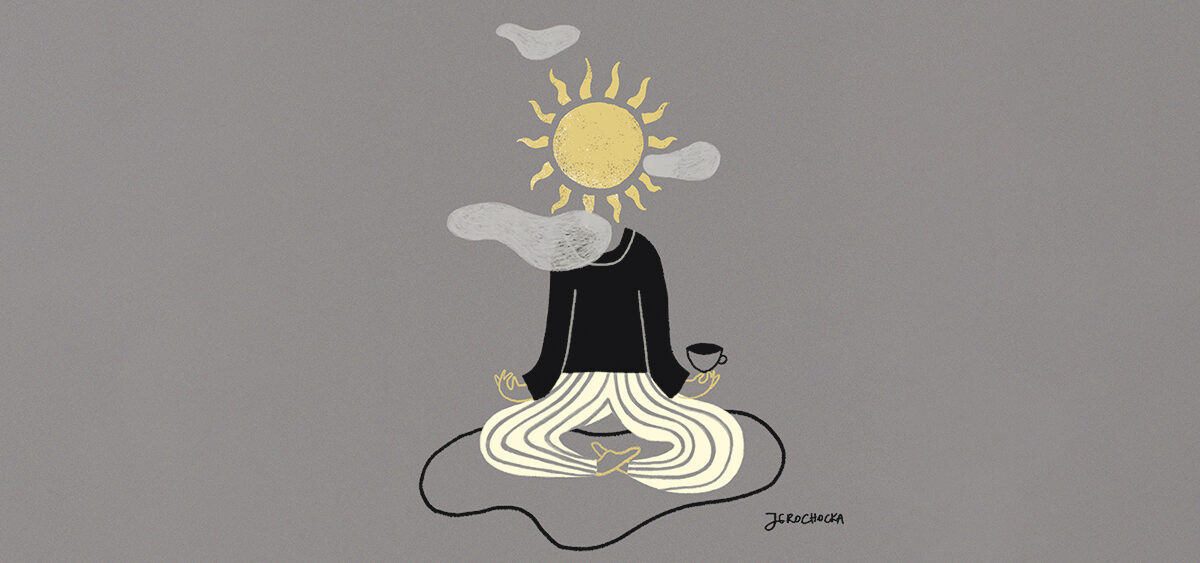
The year 2026 is the Year of the Sun, and the sun governs the entire rhythm of this creation, including the natural rhythm. If you are in harmony with it, aligned with the natural rhythm, that’s good. If, however, you are no longer in tune with the natural rhythm, this year is the best time to realign yourself with that rhythm. Definitely go to bed earlier, wake up earlier, eat well, and practice Sudarshan Kriya, Pranayama, and meditation daily. Take care of both your physical and spiritual health. This year can be a very important time to build your self-worth, strengthen your confidence, and grow as a person. In 2026, you should focus on personal development rather than on accumulating material possessions. Focus on health, spirituality, and returning to the rhythm of nature: go to sleep on time, wake up on time, and eat on time.
Ashuntossh, thank you very much for your time and openness.
Thank you. Perhaps it’s worth ending with the most important point: don’t look for the future—look for yourself. If you know yourself, you will know everything: nature, the entire universe, and how it works.
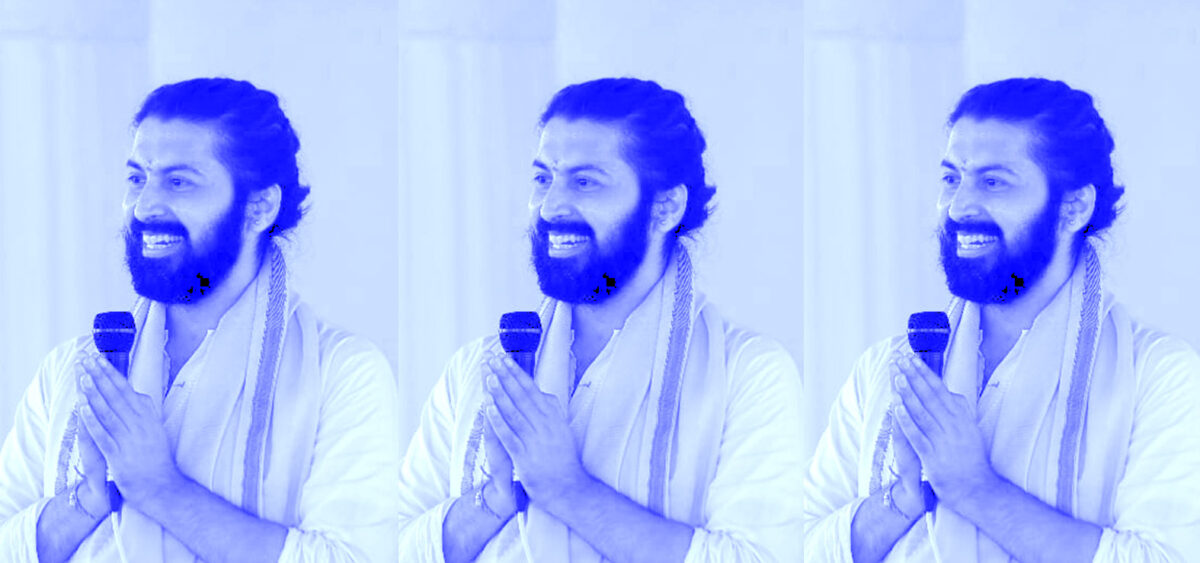
Ashuntossh Chaawlla:
Spiritual teacher, astro-psychologist and disciple of Sri Sri Ravi Shankar.
Explanation of Terms Used:
- Jyotisha—An ancient Vedic science of light and time. It concerns the influence of cosmic energies on human consciousness.
- Vedas—The oldest spiritual texts of humanity, originating in India.
- Ramayana—An epic about the life of Prince Rama, a symbol of righteousness and virtue.
- Puranas—Ancient mythological texts of India.
- Satsang—A spiritual gathering with music, chanting, and teachings.
- Seva—Selfless service to others.
- Art of Living—A global spiritual movement promoting peace, breathwork, meditation, and personal growth, founded by Sri Sri Ravi Shankar, Gurudev.
- Ashram—A spiritual place of retreat and learning.
- Moksha—Spiritual liberation; the ultimate goal of life according to Indian philosophy.
- Param Pujya Gurudev—“The Most Revered Spiritual Master.”
- Mahabharata—One of the most important and longest works of world literature; an epic spiritual, philosophical, and historical tale originating from ancient India.
- Upanishads—The deepest and most philosophical of the Vedic texts, considered the heart of India’s spiritual wisdom. They are the source of core Hindu concepts such as yoga, meditation, karma, reincarnation, and moksha (liberation).
Read similar: